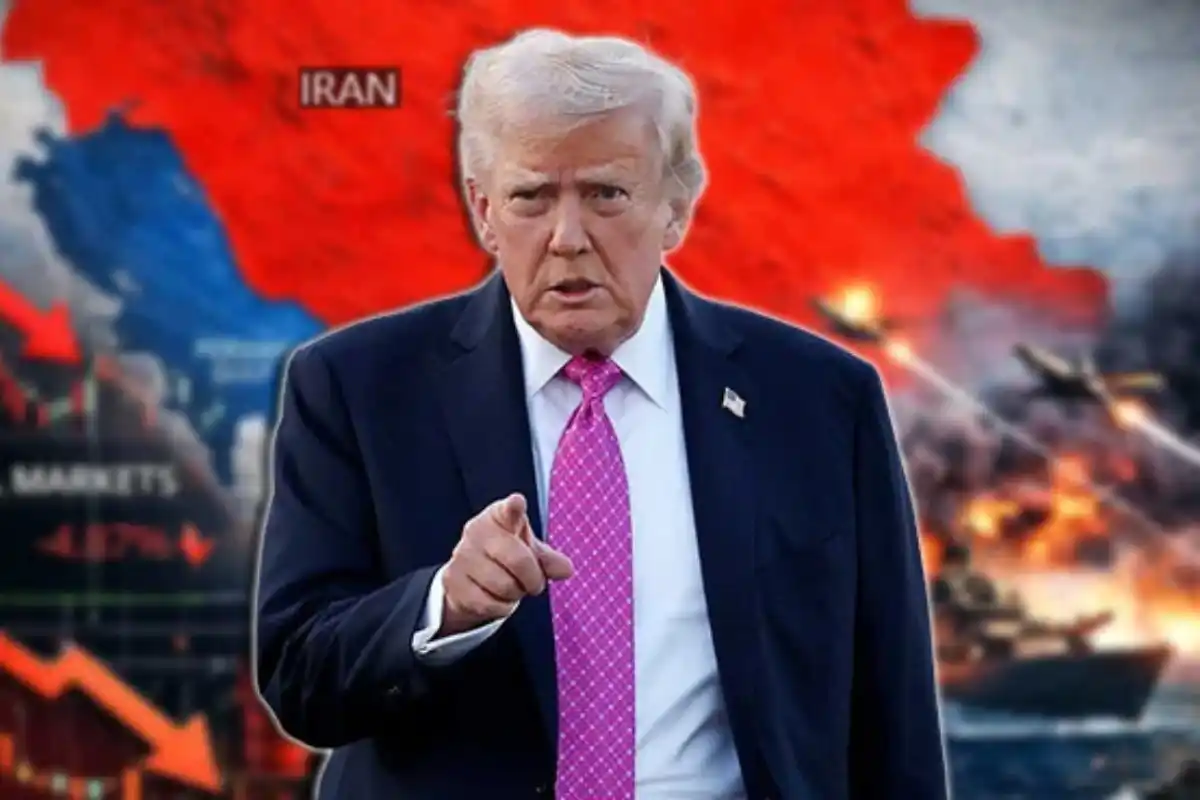
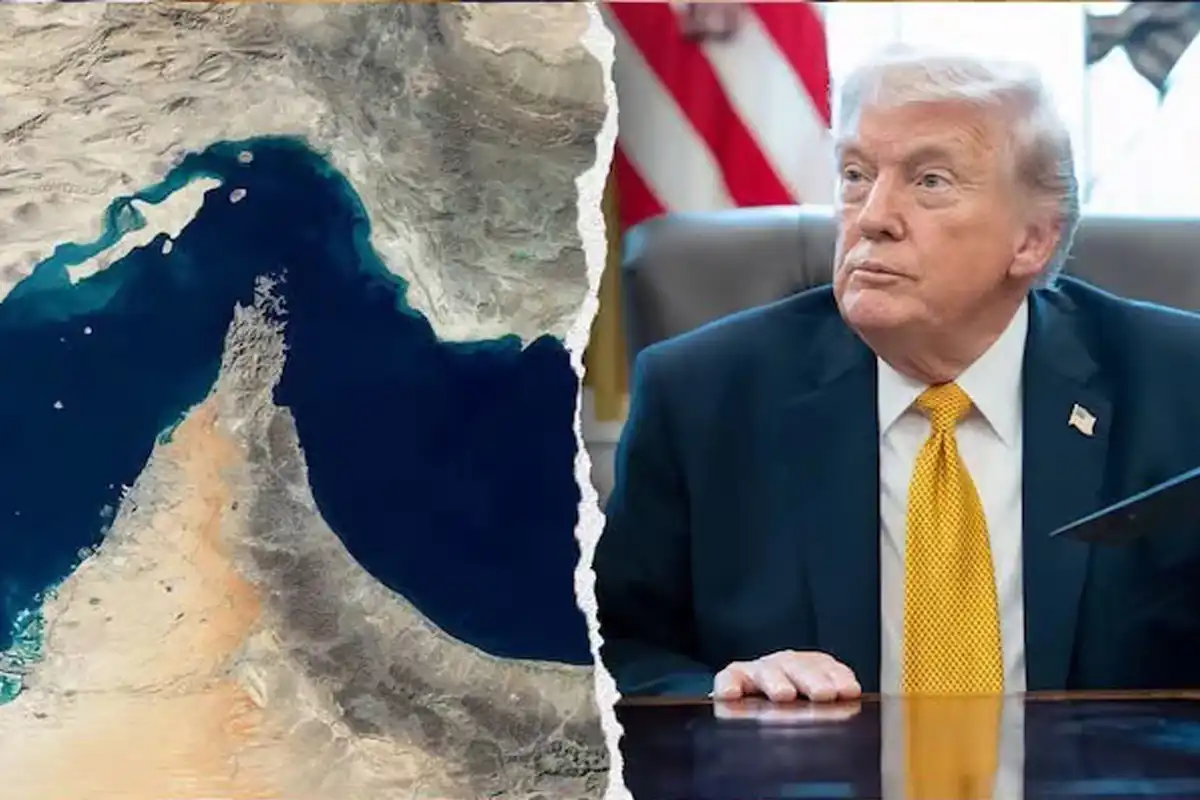
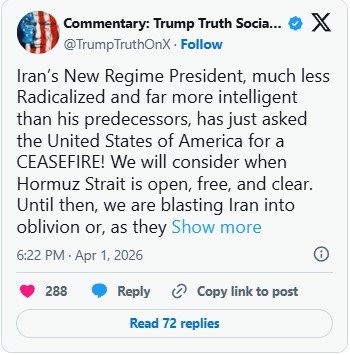
U.S. President Donald Trump stated that Iran’s leadership has reached out to the United States requesting a ceasefire, hinting at a possible turning point in the escalating conflict.
In a post on Truth Social, Trump specified that any consideration of the request hinges on conditions tied to regional maritime security.
“We will consider when Hormuz Strait is open, free, and clear. Until then, we are blasting Iran into oblivion,” he said.
The remarks arrive against a backdrop of intensifying U.S.-Iran hostilities, where continued military engagements are disrupting stability across the Middle East.
Trump has separately voiced sharp frustration with NATO allies, raising the prospect of U.S. withdrawal due to their reluctance to support American operations against Iran.
He dismissed the alliance’s reliability, labeling it a “paper tiger” and declaring that an exit is now “beyond reconsideration.”
“Oh yes, I would say [it’s] beyond reconsideration,” Trump said in an interview, underscoring his persistent skepticism toward NATO.
“I was never swayed by NATO. I always knew they were a paper tiger, and Putin knows that too, by the way.”
U.S. officials have signaled that Washington could reevaluate key partnerships once the conflict subsides. Secretary of State Marco Rubio stressed that allies’ lack of backing will not go overlooked, paving the way for a potential alliance review.
Defense Secretary Pete Hegseth called on NATO members to contribute more actively, especially to efforts securing the Strait of Hormuz—a vital artery for global oil shipments.
Economically, the standoff has driven up oil prices, straining American households and mounting political pressure on Trump ahead of elections. Surveys indicate most U.S. citizens support a quick end to the Iran confrontation.
In a connected move, the United Arab Emirates is said to be gearing up to aid in reopening the Strait of Hormuz, possibly via a United Nations-led international effort.
These developments underscore surging geopolitical strains and the risk of additional diplomatic or military escalations in the region.